

The INKSKULL #2.5: Explaining the Rules
Art. Life. Work. The Comics Care Package.

Hello! I’m Paul Peart-Smith, a comics cartoonist for 35+ years. This is my INKSKULL newsletter, designed to show my work, offer inspiration, and figure out our 21st-century life.
Today’s Menu:
Updates: What’s on the desk?
Life Hack: The 10 Rules of Happy I’ve observed some common threads in the personal development space. See what you think.
Inspiration: Jules Feiffer A selection of my favorites comics from his classic era.

Hellos folks. It’s the end of March already?! A quarter of the way through 2025 has flashed past somehow. Hope you’re having a great time of it so far, despite the relentless ugliness of the news. Remember, somewhere, someone is getting a hug. I hope it’s you.
Anyway, I’m barrelling on with a long-form project and a commission or two, some of which I can share here.

I did a cover for the upcoming trade paperback collection of Romanis Magicae TBA.
I recently created the cover for the trade collection of Romanis Magicae which will collect the first five issues and bonus material. The project will be crowdfunded shortly, announcement coming soon. We recently got some good news about a new publisher for future books, papers are being signed, so stay tuned for that reveal also!
I wanted a “Euro” feel for this series, which I think I nailed on this cover.
“The slums of ancient Rome, a young girl is plagued by horrifying visions of past events that threaten the future of the greatest city in the ancient world.”
You can get a taste of the book huzzah!
Ideal for parents home-schooling children from 10 upwards and people of any age who know they have a cartoonist in them but need a friendly push.
“ Paul has been mentoring and tutoring my daughter Billie for the past year. In that time she has had the best experience possible. He met her where she was and, at the same time, showed her the steps forward in such a clear way.
Each lesson begins and ends with a short, calming mindfulness exercise that really sets the tone."
-Jo
Message for enquiries.
A recent commission:
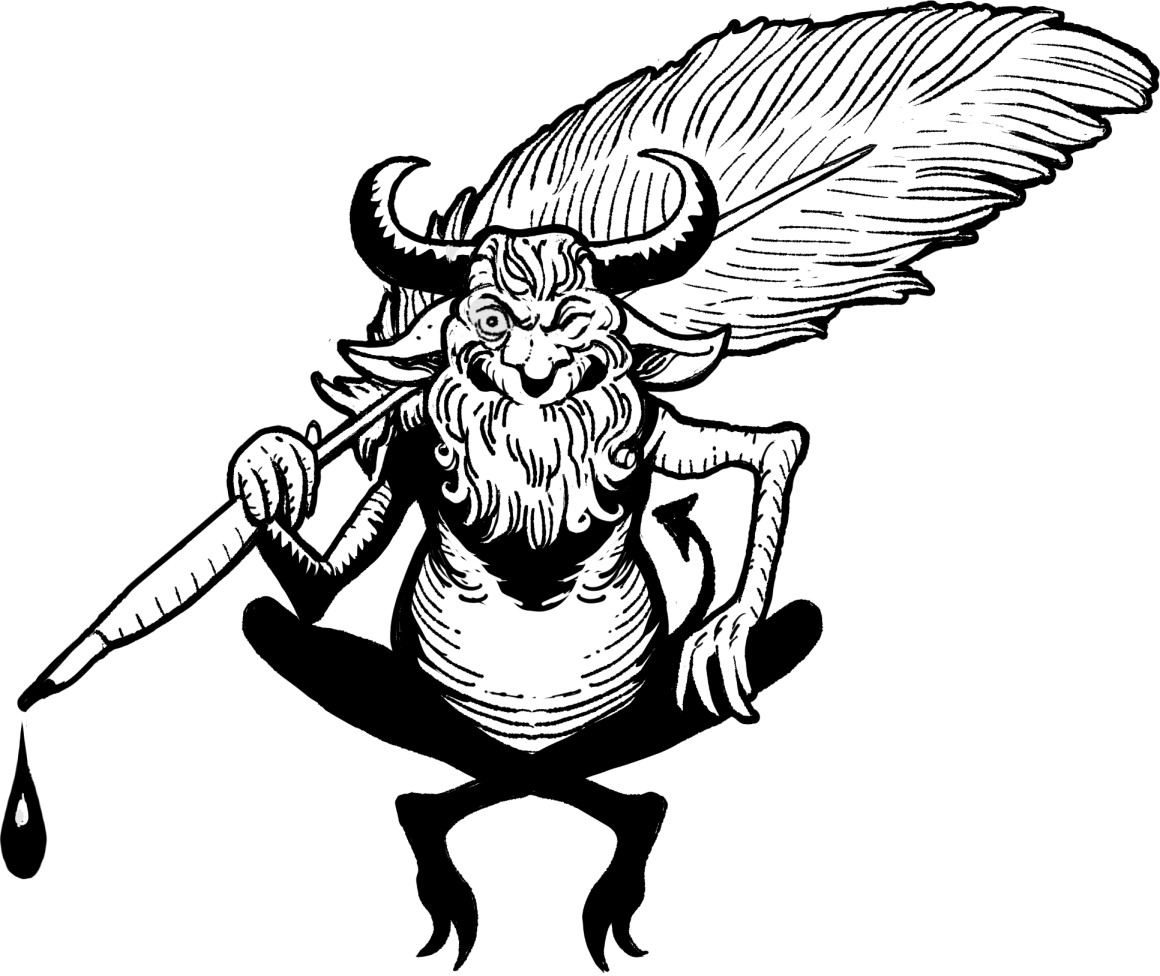
A Titivilious, a devilish imp who sits on the shoulders of writers and creates mistakes. A fun gig!
Books wot I have drawn:


AN INDIGENOUS PEOPLE’S HISTORY OF THE UNITED STATES: A GRAPHIC INTERPRETATION published by Beacon Press.
W.E.B. DUBOIS’ SOULS OF BLACK FOLK: A GRAPHIC INTERPRETATION published by Rutgers University Press
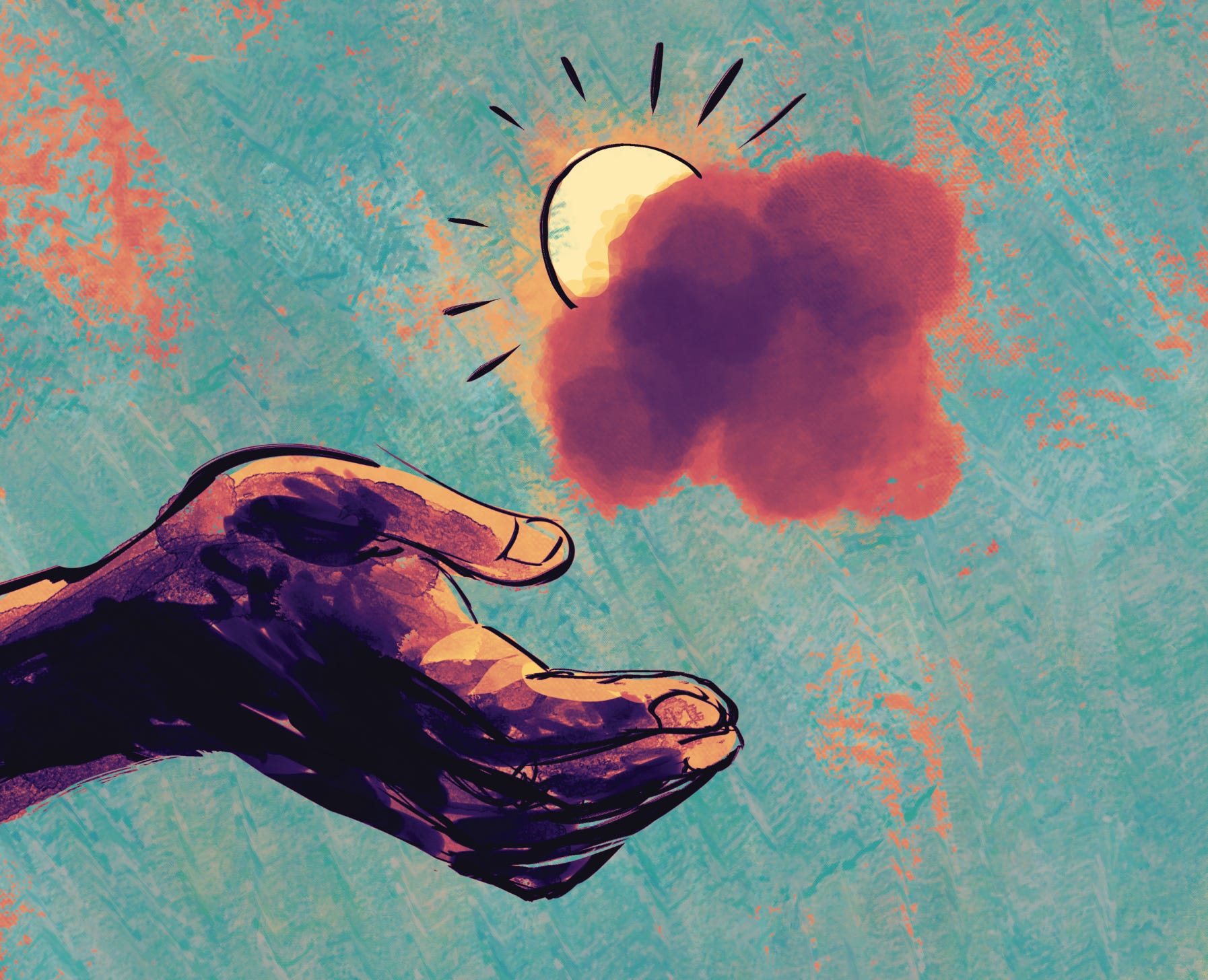
THE 10 RULES OF HAPPY.
“You can choose to be happy or unhappy.” —Alfred Adler
What is happiness, and how does one choose to be happy? This question is behind all the major religions and philosophies, and in the American Constitution, underpins an entire culture. It’s the unspoken promise of politicians, self-help gurus, and psychologists; it’s the major objective of our modern Western lives.
The Confucians believe that happiness can be achieved by ignoring it as a goal and focusing on gaining balance. Buddhists observe that the desire to be happy leads to suffering, while in Islam and Christianity, happiness comes from submission to God’s will.
Capitalism posits happiness flourishes through the accumulation of individual services and material wealth, and in socialism through the cultivation of public resources for the common good.
In self-help and psychology, happiness is building up healthy habits of thought and action, reframing perception so that taking on responsibility for one’s own life and contributing to others is natural.
But how to do that? It’s not just a matter of thinking positive. Changing one’s disposition requires big mindset changes. I see common threads and concepts in the books I’ve read so far, that sit at the base of positive change. I’d like to list 10 of them:
Your life reflects your internal state, not the other way around.
Your state is the lens through which your world is seen. From the outside, some would call it your vibe or energy. To be less “woo-woo,” it’s your body language, speech, and point of view. We all know the difference between people who energise us and people who drain us. We all know people for whom the glass is half full, and others for whom the glass is empty, irrespective of their circumstances, good or bad. Your view of life dictates your life.
You are not a victim.
Is there a time you can think back to a time in which something happened in your life that was unwanted but taught you something valuable? Is there a time you achieved something you wanted, and it turned out to take something from you? Life comes with no guarantee. There will be suffering. There will be joy. Both come not only through our efforts but often despite them. There is only one useful thing we can do with these experiences. Learn how to be better from them. In that sense, we take leadership of our lives and don’t blame events for our state. This is summed up in the idea: “ Life happens for you, not to you. “
While you don’t have control over everything that affects you, you can have control over your reactions and responses.
Much of everyday life is made up of external events and our internal, then external responses to them. We act without thinking about events that trigger us, and sometimes we think strategically to solve a problem. What divides the two responses? Meaning. The meaning we give to a situation creates the emotional feedback we receive from that meaning. If we can change the meaning we give to our triggers, we can change the emotion and our responses. That is a power we have that cannot be removed.
Life is, by definition, alive. Like all living things, it gives and receives energy. Ordinary reality is reciprocal, even if extraordinary events are beyond our control.
Some aspects of reality are so obvious they’re taken for granted. We look at animals and plants; we instantly acknowledge that we are looking at the physical expression of the earth itself. We don’t think of a flower as coming into the world, we acknowledge that it came out of it. We humans also didn’t come into the world. We also came out of it. We are as natural as that flower, and also a physical expression of the earth. The entire natural world lives only by its ability to convert energy from one form to another; light into sugars through photosynthesis, the plant eaten by a herbivore, the herbivore eaten by a carnivore or omnivore. No one survives alone. Exchange is vital. Hoarding kills.
Your life is the result of the energy you give, not just what you take.
Studies show that we are at our happiest when we feel useful. Learning is taking in energy through listening or reading, expending energy through execution and assessing results to go again. Our efforts can pass on energy to others through inspiration. A simple example of this energy exchange is a parent encouraging smiling in a baby by smiling. If we want to improve our lives, we often need to assess what we are expressing to other people.
Beware the ego. It can take complacency and fear and turn them into virtues.
I’ve heard of people arguing against restrictions, but how often do we argue for our limitations? When we’re challenged by a task, and the discomfort we feel is validated by reasons we stand by?
“I didn’t ask for this”
“ I’m not ready yet.”
“When I get the money.”
When I get the time.”
“What if it fails?”
“It wouldn’t have worked anyway.”
Sometimes we can obscure fears with reasonable-sounding logic. It’s still fear. We’re happier when we acknowledge it.
Evidence can be found for any position and any behaviour. Be careful what you argue for.
Life is not so much about whether we’re right or wrong. We can support any position we take. It’s about taking a moment to realise what we’re arguing for and making sure we never forget that our humanity is bound up in respecting others’ humanity, even at their worst. Not easy, I know.
It’s possible to ask questions about how life works. Answers can be found in the collective and individual wisdom of the ages via books and other media.
We don’t have to figure life out alone. Have a problem? Read what others have done to give yourself a new optional solution. Today, we have videos, podcasts, life coaches, and books to get insights we could never arrive at alone. We don’t have to follow any one path set out by others, the more I take in, the more I see the individuality of each path. However, there are common principles that appear again and again, that work, no matter who you are. Gravity is gravity.
We can grow.
No matter where we are in life, we are not the finished article. If we want. Whatever we can’t do today, we can learn over time and commitment, especially if it aligns with our interests.
Have the courage to dive in. Solve/fix as youcontinue.
We are either growing or dying. Since death is the baseline we will all reach, adding growth through wisdom makes knowledge and/or experience, and our fleeting existence, worthwhile. There is no standing still. We are on the conveyor belt to death. Go out growing.
We live within the journey, not the future destination.
It’s good to have goals. They are a point on a map that creates direction. But goals shift when we get what we want, or move away from us the more we put them on a pedestal. We live within the minute by minute, day by day, ever-present now. The future is only imagined. The past? Gone and also, only imagined. Each of us is running our race in the moment, where our strongest opponent is ourselves. But, if we choose, we can be our own best friend. That, to me, is happiness.
“Very little is needed to make a happy life; it is all within yourself, in your way of thinking.” —Marcus Aurelius Antoninus
Recommended Books


The Courage To Be Disliked by Ichiro Kishimi & Fumitake Koga
Hidden Potential by Adam Grant

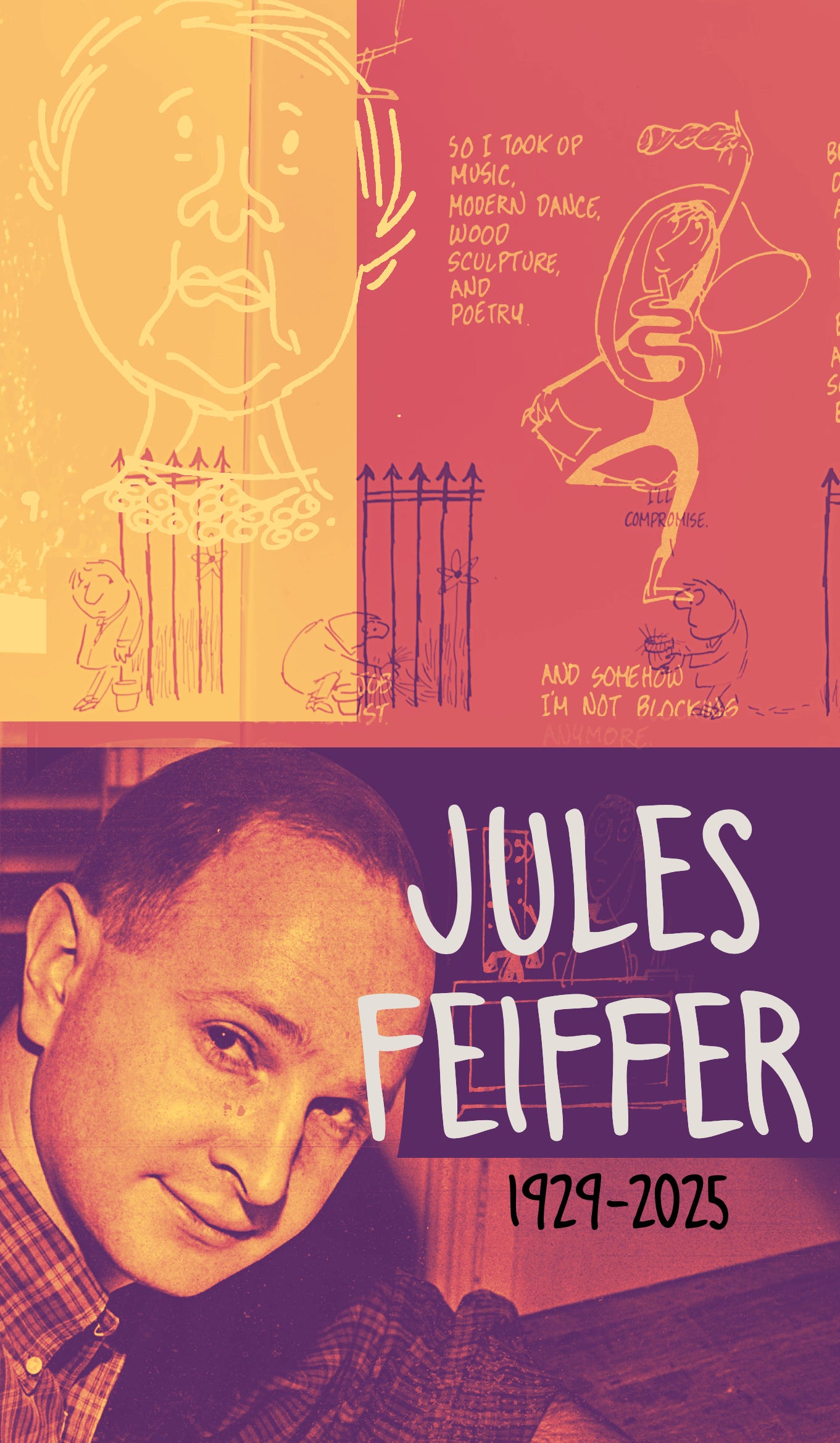
Jules Feiffer died in January at the grand old age of 95. I don’t have a deep dissection of his work, it would take five more newsletters to cover his work with Will Eisner, his Hollywood screenwriting, illustrations and his extensive cartooning career that continued right up to his passing. Beside, I dont know all that stuff as well as the three books of his that I have in my collection. Sick, Sick Sick, The Explainers, and the compilation book The Penguin Feiffer.
I’d like to share some of my favourite strips of his that speak for themselves.


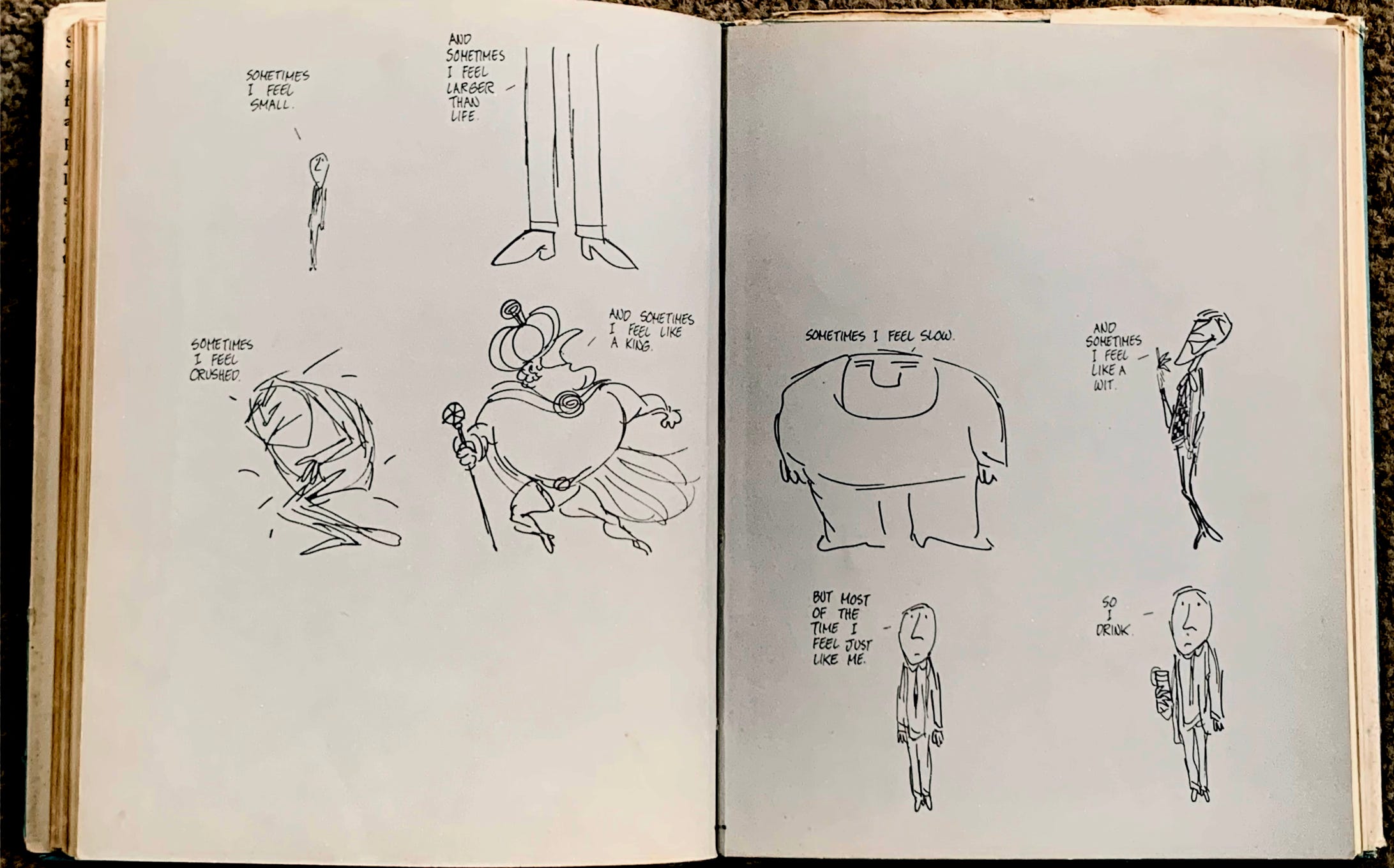


Feiffer’s been very much on my mind recently. Changes are coming to my practice based on it. It’s a very simple format, heavily based on monologues or two-hander stage plays and that’s why it works. Economic focus on people.


Here are my copies of his classic stuff. Couldn’t find my Sick, Sick ,Sick for some pesky reason. I bought all the books I have of his in charity shops, but maybe they’re still in print? Well worth finding.


“I told the doctor I was overtired, anxiety-ridden, compulsively active, constantly depressed, with recurring fits of paranoia. Turns out I'm normal.”—Jules Feiffer
Music:
MF DOOM X TATSURO YAMASHITA
Some people find them cheesy, but I love mashups. For sure they can be poorly done, but there’s more than enough material out there that proves that the art form can be trancedental, energising and revelatory. When British-Japanese music producer Dan Tanda put MF DOOM (….) and TATSURO YAMASHITA, together, magic, pure magic, was made.
From Dan’s site:
“His acclaimed mashup album "MF DOOM X Tatsuro Yamashita" brought together the unlikely pairing of the late Daniel Dumile's super villain and Japanese Funk Pop legend, Tatsuro Yamashita. The 6 -track bootleg soon became an online underground hit being compared to similar works such as "The Grey Album" and "Sadevillian." Still growing in popularity, the bootleg is on Youtube and has passed 1 million views.”
It works because DOOM’S wordplay is so pithy, direct and fun, while Yamashita’s sound is big, generous, and ecstatic. It’s a mixture made to make you simultaneously dance and laugh, a directed shot of adrenaline with a side order of dopamine every time you pick up on a clever pun. A hoot.
Kicking about:
I’ve been doing some unofficial translating!
Amongst my friends, it’s been no secret that I have been mucking around with learning French for years. It’s a tricky thing, speaking a different language. I’ have room to improve. Once, on a trip to Angouleme, my pronunciation of “Deux pains au raisin? was said so flatly that the ribbing from my friends “Two pounds o’ raisins, mate? “ has followed me for the last 30 years!
I kept whacking away at it and I recently found a sweet spot: translating French comics into English. I’m having a lot of fun, and learning a lot. This is a snippet of a Florent Ruppert strip in the French comics anthology magazine CHARLOTTE MENSUEL.


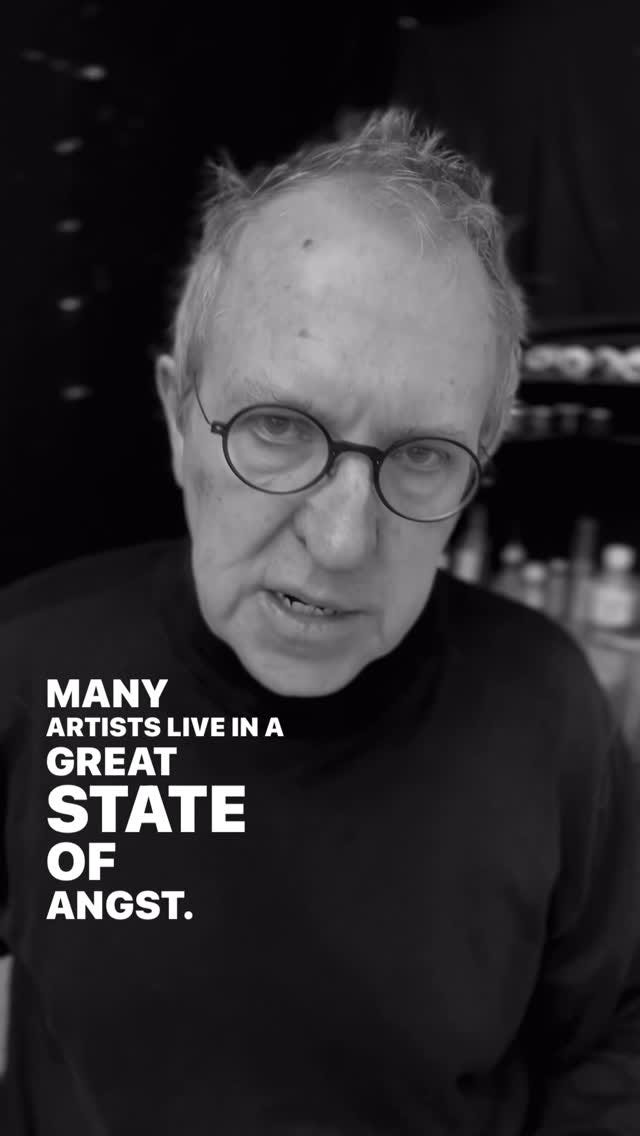
I leave you with this from painter Edward Povey, incredible advice for any working creative:
Enjoy!
See you in two weeks!
Another excellent post. Feel much inspired & mentally calmed. Thanks Paul!